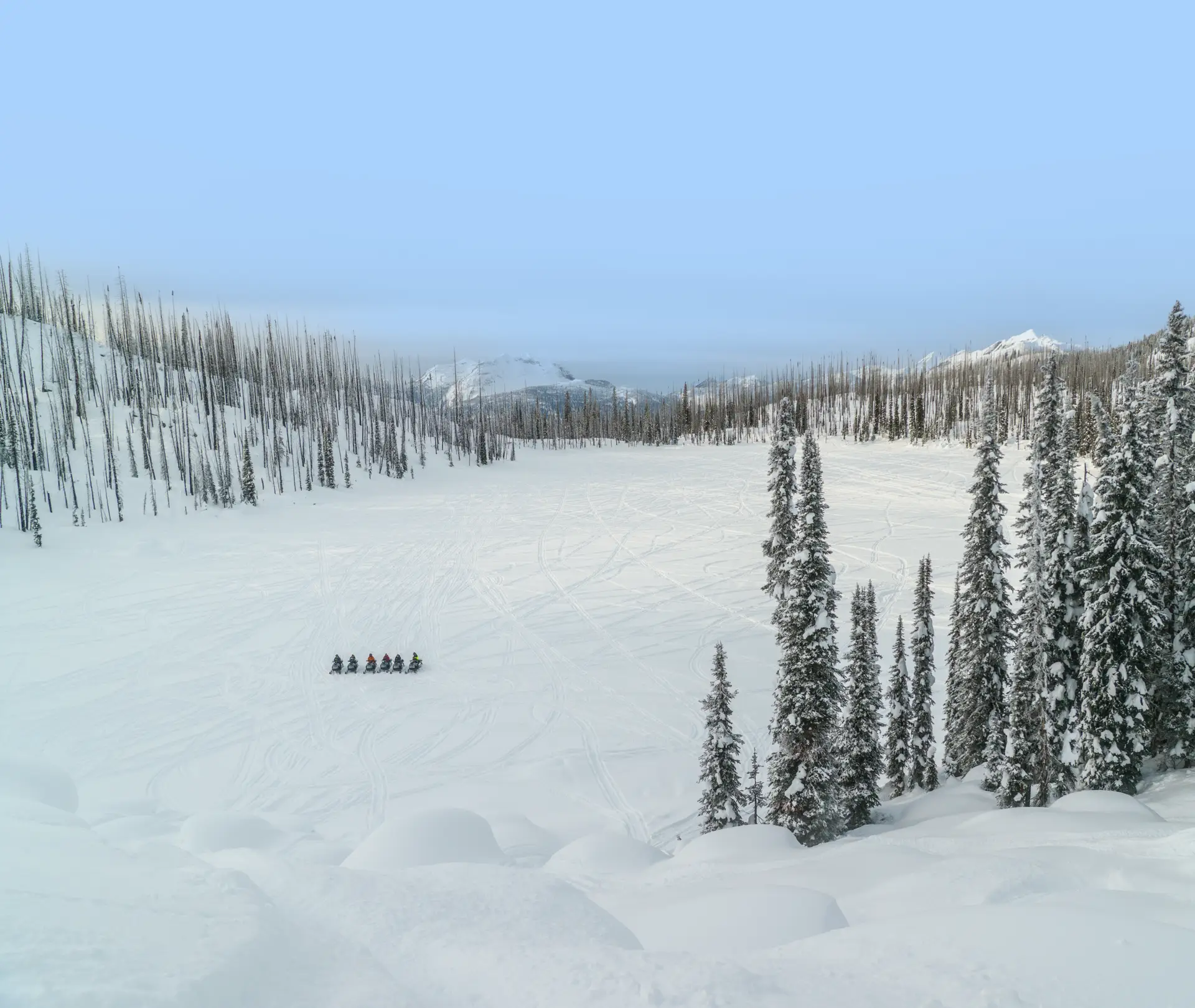
The Monashee Range
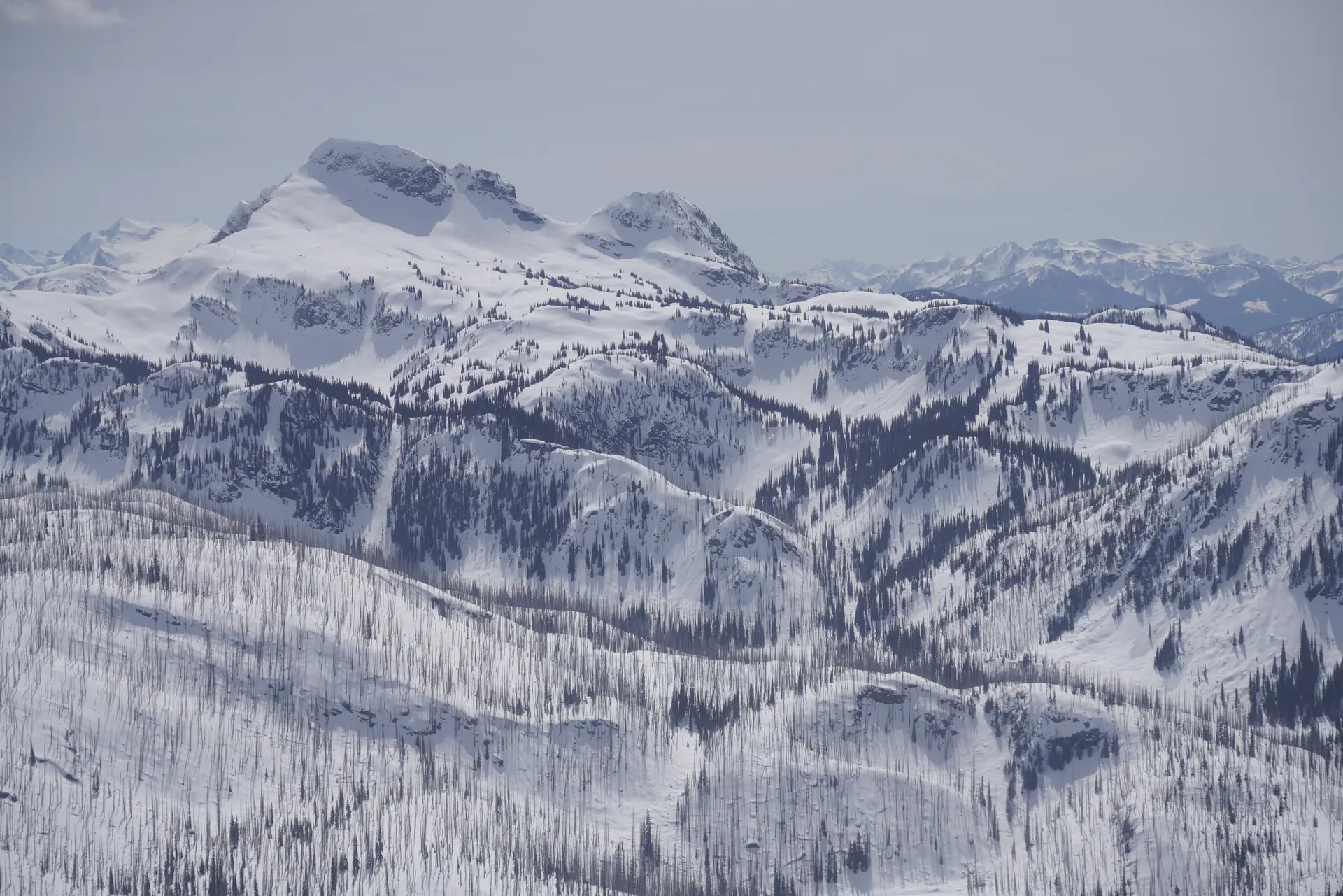
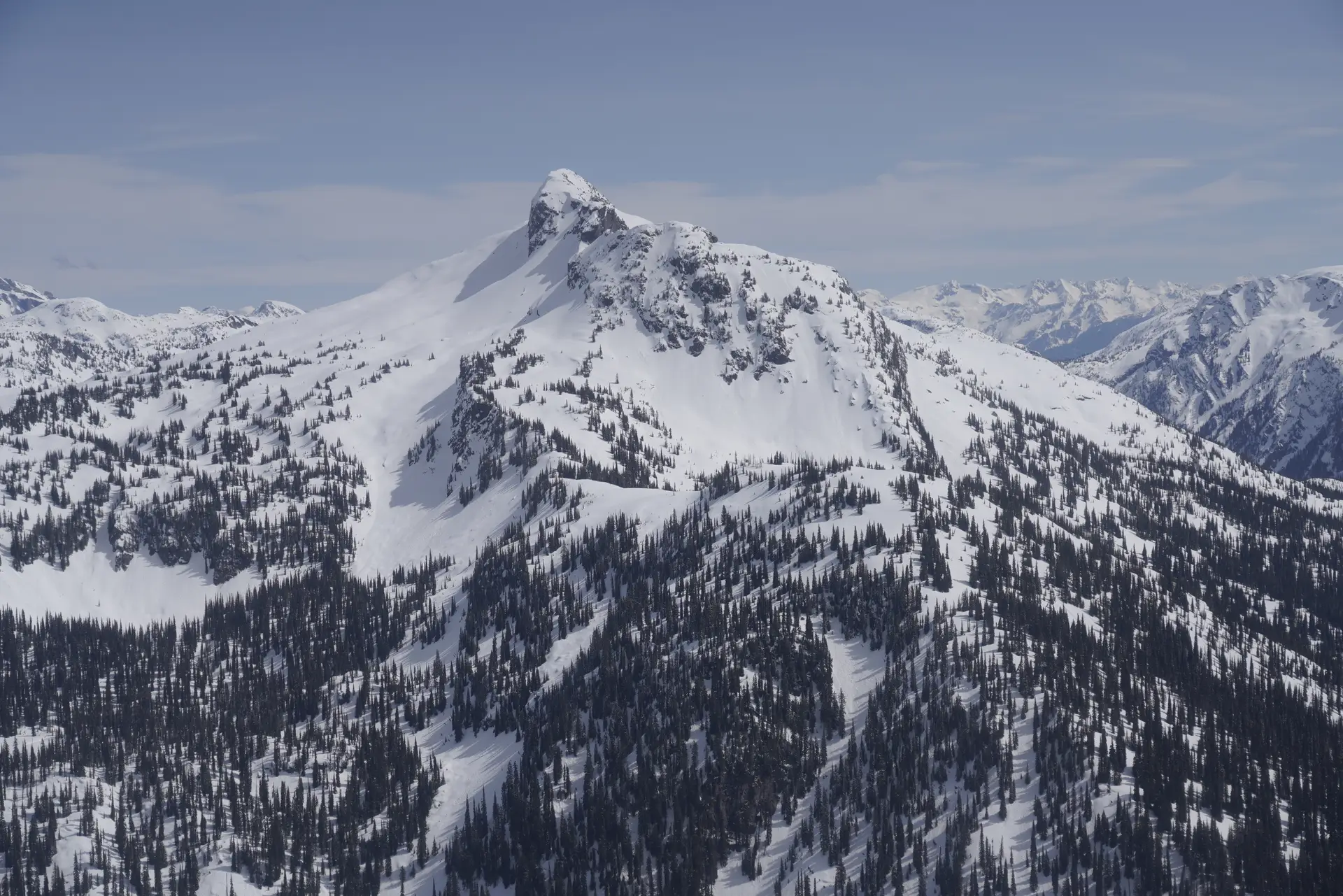
You’re standing at the summit of Owlhead Mountain, near Sicamous, sled parked behind you, engine ticking as it cools. The valley floor is 5,000 feet below, and you can see the Shuswap Lake system from up here. Owlhead Mountain is the start of a valley corridor that stretches 60km west to Revelstoke’s Frisby Mountain. This is the undisputed “Holy Grail” for backcountry winter adventure. All of the major Heli-Ski, Cat Ski and guided snowmobile operators operate here for very specific reasons.
Sicamous, roughly an hour west of Revelstoke, catches the same system from a slightly different angle. The mountains here are equally loaded with snow and offer similarly direct access to backcountry zones, but with a smaller-town feel and a rider community that’s been quietly thriving for years.
So why do the Monashees keep coming up in the same conversation as the best riding on the planet?
Mild Temperatures: Extended periods of cold are a primary driver behind the formation of persistent weak layers. The Moanshees are known for its mild temperatures -2c to -12c (10f – 28f) is the most common and frequent.
Quantity Snow: The ranges surrounding Sicamous – Revelstoke sit at a peculiar crossroads of Pacific weather systems and interior terrain. Storms roll in loaded with moisture, hit the peaks, and drop massive amounts of snow.
Riding area for all abilities: British Columbia has over 3,000 kilometres of sled trails spread across mountain ranges that would individually qualify as world-class anywhere else.
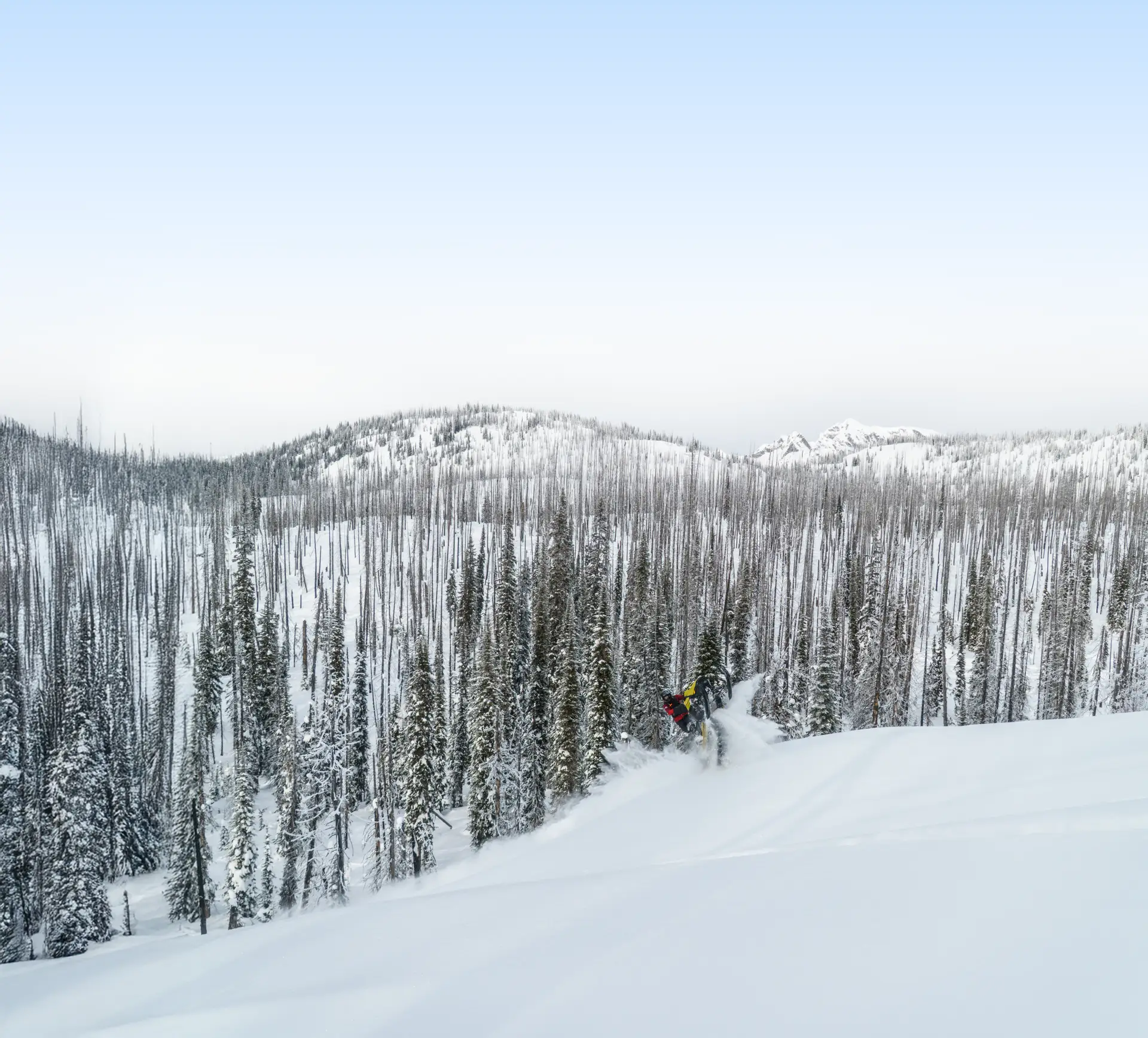
The Monashees have a wide riding band from 4000ft to 800ft providing a wider range of available riding. The terrain compounds the weather advantage. From the valley floors to the high alpine, the Monashees offer a vertical range that forces you to ride differently at different elevations. Lower down, you’re threading old-growth timber and cut block terrain. Push higher, and the trees thin into sub-alpine glades and eventually full alpine bowls. A single day can take you through four or five completely different riding environments without leaving the same zone.
Perfect Tree Spacing: The Monshee mountains are known for exceptional tree spacing making it perfect for skiing and snowmobiling. If the weather rolls in and visibility is low the ability to tuck into the trees and ride is key to maximizing your day on the mountain.
Comparing mountain ranges is like comparing different days on the same mountain; context matters. But if you’ve ridden the Selkirks, the Purcells, or the Coast Range, you’ll feel the differences in the Monashees pretty quickly.
The Selkirks, which share a valley with the Monashees just across the Columbia River from Revelstoke, are dramatic and steep. The terrain is technical, the exposure is real, and on the right day they’re as good as anywhere in the world. What the Selkirks sometimes lack is variety at a single staging area. You tend to commit to a specific style of riding when you go there.
The Purcells further east lean toward long approaches and remote backcountry. They reward riders who want to cover ground and explore, but the access can be demanding and the infrastructure thinner.
The Coast Range covers Whistler, Brandywine, the Pemberton Ice Fields area and it’s spectacular in terms of scenery and glaciated terrain. It also sits much closer to population centres, which means more traffic and heavier, wetter snow conditions in a bad storm cycle.
What the Monashees do differently is compress the best elements of all three. The snow quality leans drier than the Coast. The terrain variety within a single zone rivals what you’d spread across three days in the Purcells. And the access infrastructure around Revelstoke and Sicamous means you’re not burning half your day just getting to the good stuff.
The Monashees don’t ask you to choose between convenience and quality. You can roll out of a lodge, hit a groomed trail, and be in the alpine in under an hour.
For beginners, zones like Blue Lake near Sicamous offer wide, forgiving alpine terrain where you can build confidence without being surrounded by consequence. For advanced riders, the same general area opens into technical terrain that will challenge anyone. The gradient of difficulty here is unusually well-distributed.
You’re up before the light fully hits the peaks. Coffee, breakfast, gear check,mountain lunch packed, fuel. The groomed access trail is firm in the morning cold. It’s a fast and predictable chance to warm up your body and get your head into the mountain before the real riding starts.
Within an hour, the trail gives way to ungroomed terrain. This is where the riding shifts. You start reading the terrain rather than just following a line. The guide in front of you picks a route through the trees and you track their decision, watching how they manage the pitch and the depth. First run through fresh snow is always the loudest while everyone finds out pretty quickly how their snowmobile is performing in the conditions. sled is handling.
The middle of the day opens up. You’re in the bowls now, or working through the timber, or climbing a long ridge to earn a descent that takes two minutes but will stay with you for years. Mountain lunch happens somewhere with a view, usually at a secret spot the guide knows well.
The afternoon brings decisions. Your legs are starting to feel the work. The smart choice is to dial back, pick cleaner lines and save energy. Or if you’re feeling up to it you can follow the guide on a climb or down a drop you wouldn’t have considered at 9 a.m.
By late afternoon you’re back on the groomed trail. The descent feels faster on tired legs. Rolling into the staging area, the conversation immediately turns to tomorrow.
Carl Kuster Mountain Park operates out of this country. The team has spent decades riding Boulder Mountain, Frisby Ridge, and the backcountry terrain surrounding Revelstoke and Sicamous. We understand what makes the Monashees work and where the margins are.
For a rider coming in from outside the region, that local knowledge changes the trip entirely. You’re not spending your first morning figuring out which direction to point the sled.
[IMAGE: Group of riders stopped on a ridge, guide pointing toward a bowl below]
Most riders who visit the Monashees can tell you exactly when they knew they’d be back. It’s usually a specific moment or a single view that lives in their memories and encourages them back. Pretty soon you’ll start comparing everywhere else to the Monashees.
The snowfall is part of it. The terrain variety is part of it. The accommodations at CKMP, the meals, the Guides makes it easy to want to stay longer than planned and hard to leave when you’re supposed to.
Riding here feels like the sport at its most complete. You get the technical challenge of steep, complex terrain alongside the pure joy of open alpine. You get snow conditions that make the machine feel light and the riding feel effortless on a good day. You get the kind of mountains that make you want to be a better rider. Not because they punish you, but because they show you what’s possible.
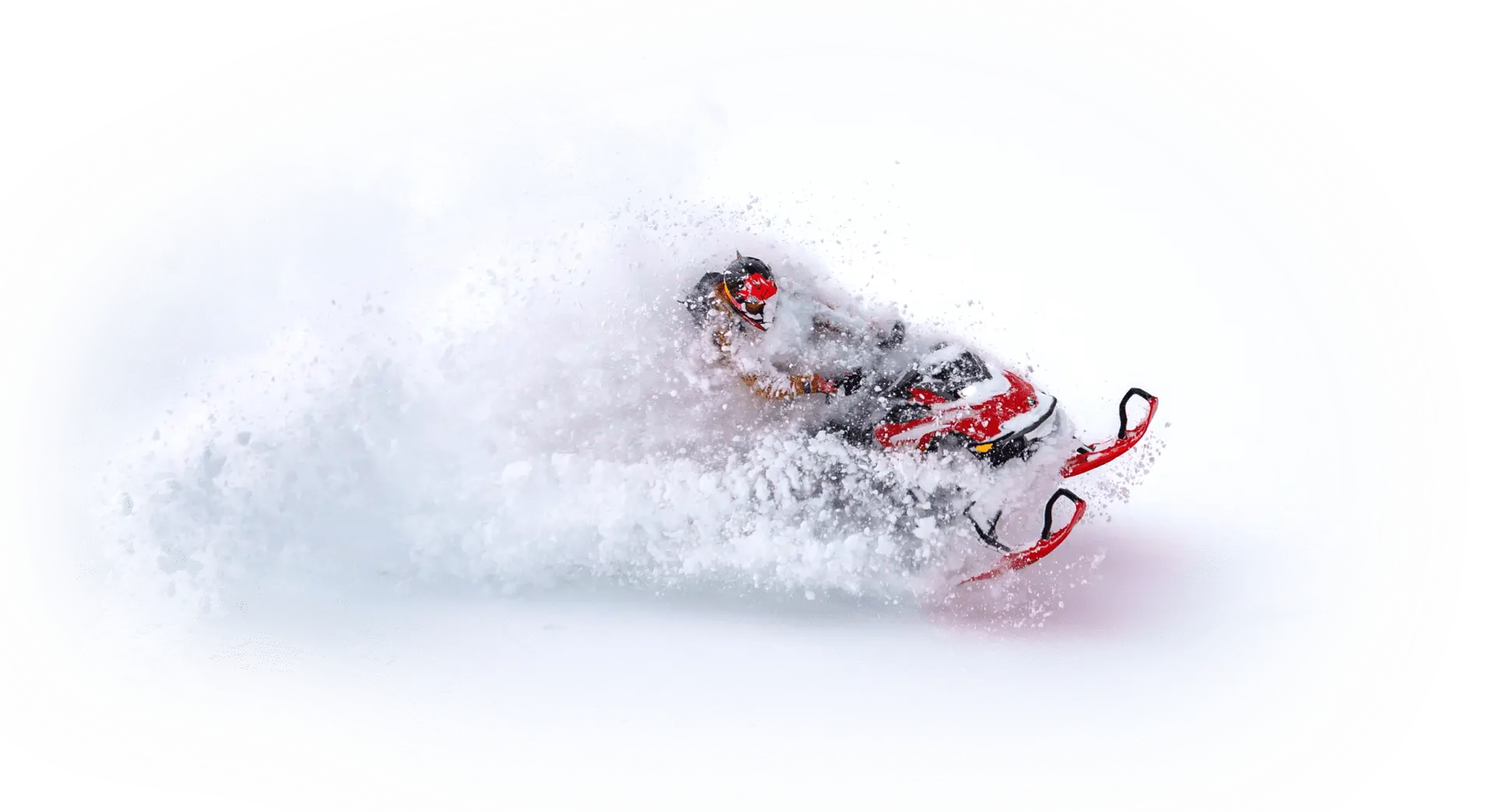
Go deeper into the backcountry and discover hidden pockets of untracked powder with one of our CMBGA certified guides.
For pricing, please refer to our FAQs on ‘Riding Here’.