
Discover BC Backcountry
When you look out across the endless peaks of the Monashee Mountains today, it’s hard to imagine a time without the roar of a two-stroke engine echoing through the valleys. British Columbia is now the global epicenter of backcountry snowmobiling, a place where riders from around the world, with all levels of skill and ability come to test their skills on all types of mountain terrain. The sport we know and love didn’t start with high-horsepower turbos and carbon fiber chassis. It began with humble, practical roots, driven by the necessity of moving through a landscape that winter tries its hardest to lock down.
The history of snowmobiling in British Columbia is a story of innovation, community, and an unyielding desire to explore the wild. From the early “snow machines” that chugged along at walking speed to the gravity-defying feats of modern hillclimbers, the evolution of sledding in BC mirrors the province’s own rugged spirit.
Long before anyone considered “highmarking” a recreational activity, the concept of over-snow travel was purely practical. In the vast, snowy expanses of rural Canada and British Columbia, winter isolation was a genuine threat. Early pioneers, trappers, and utility workers needed a way to navigate deep snow where horses and cars failed.
In the early 20th century, inventors began tinkering with modified Ford Model T’s, fitting them with tracks and skis. These “Model T Snow Flyers” were clumsy and heavy, but they worked. However, the true breakthrough came in the late 1950s and early 60s with the invention of the lighter, more agile snowmobile by Joseph-Armand Bombardier in Quebec.
When these early Ski-Doos arrived in British Columbia, they changed everything. Suddenly, traplines could be checked in hours instead of days. Remote power lines could be serviced efficiently. For the people living in the mountain towns of the Kootenays and the Interior, the snowmobile was not a toy; it was a lifeline that shrank the vast distances of winter.
By the 1970s, the snowmobile had shed its strictly utilitarian image. As technology improved the engines became more reliable, tracks got wider, and suspension systems actually began to suspend. That’s when locals started to realize that these machines were incredibly fun.
This era marked the birth of recreational riding in BC. Clubs began to form in towns like Revelstoke, Sicamous, and Valemount. These early organizations were crucial. They weren’t just drinking coffee and talking shop; they were cutting trails, building warm-up shelters, and negotiating land access. They laid the groundwork for the massive network of groomed trails and riding zones we enjoy today.
It was during these decades that the culture shifted. Riders stopped sticking solely to the logging roads and began looking up. They saw the alpine bowls and the ridges, and they wondered, “Can we get there?”
The transition from trail riding to mountain riding was a slow burn that eventually exploded. In the 80s and 90s, stock sleds were built for flat trails in the Midwest, not 6,000-foot climbs in the Monashees. BC riders had to innovate.
This was the era of the “mod.” In garages across the province, riders were extending tunnels, swapping out short tracks for longer paddling tracks, and tweaking clutches to handle elevation. If you wanted a mountain sled, you had to build it yourself.
Manufacturers eventually took notice of what was happening in Western Canada. The demand for factory-built mountain sleds drove huge leaps in technology. The introduction of the first true mountain-specific sleds changed the game, allowing riders to access terrain that was previously impossible to reach. Deep powder riding went from a struggle to an art form.
As the equipment caught up to the ambition of the riders, British Columbia cemented its reputation as the premier destination for snowmobiling. The unique geography of the “Interior Wetbelt” creates snow conditions found almost nowhere else on earth. We get the massive accumulation of a coastal climate but with the drier, lighter consistency of the continental interior.
This “Champagne Powder” drew the eyes of the world. In the late 90s and early 2000s, snowmobile films began showcasing the insane drops, jumps, and climbs happening in BC’s backcountry. The sport shifted from a weekend hobby to a high-adrenaline athletic pursuit.
Locations like the Monashees became proving grounds for the best riders on the planet. This influx of talent and attention spurred a new industry. Guiding operations, like Carl Kuster Mountain Park, emerged to help visiting riders navigate the complex terrain safely and efficiently.
Today, snowmobiling in BC is a sophisticated, multi-million dollar industry that supports dozens of rural communities. But the spirit remains the same as it was in the early days: a love for the mountains.
The modern era is defined by a focus on stewardship and safety. With more riders accessing remote terrain, the community has rallied around avalanche education. BC is a leader in mountain safety, with organizations like Avalanche Canada providing world-class training and resources.
We’ve also seen a shift towards preserving our riding areas. Clubs work tirelessly to maintain relationships with government and environmental groups to ensure that we can continue to enjoy these wild spaces for generations to come.
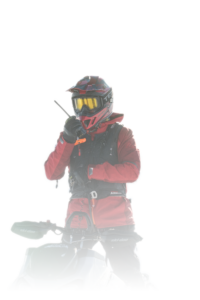
From the clunky workhorses of the 1950s to the featherweight, turbocharged machines we ride at CKMP today, the history of snowmobiling in British Columbia is a ride of constant progression.
Every time we drop into a fresh bowl or navigate a technical tree line, we are riding in the tracks of the pioneers who looked at these mountains and saw potential. The equipment has changed, but the feeling, that rush of cold air and the freedom of the alpine, is exactly the same.
As we look to the future and the continuation of even more capable technology being developed, one thing is certain: British Columbia will remain the heart of the snowmobiling world.